
.
Portraits of the great-what schoolboy does not remember them? They greeted us in the offices of “Russian-literature” and music, diluted posters with formulas in the cabinets of physics and chemistry, then hung in the frame of the frames, then collected on a single stand, colored or black-white. Today we nostalgic try to remember those burnt, left from bad press then in Greens, then in Zheltiznu portraits, and at the same and to remember, whose brush belongs to what.
As for the design of portraits physics and chemistry variety did not indulge-the office was the first decorated usually Sir Newton in a long veil of wig and Lomonosov in a wig with a braid. To represent the chemistry was entrusted to Mendeleev (and that not always). The music cabinet was usually pleased with Bach’s letters, the lion’s mane and the frantic gaze of Beethoven and the frightening Mussorgsky in the hospital robe.
Portrait of composer M. P. Mussorgsky
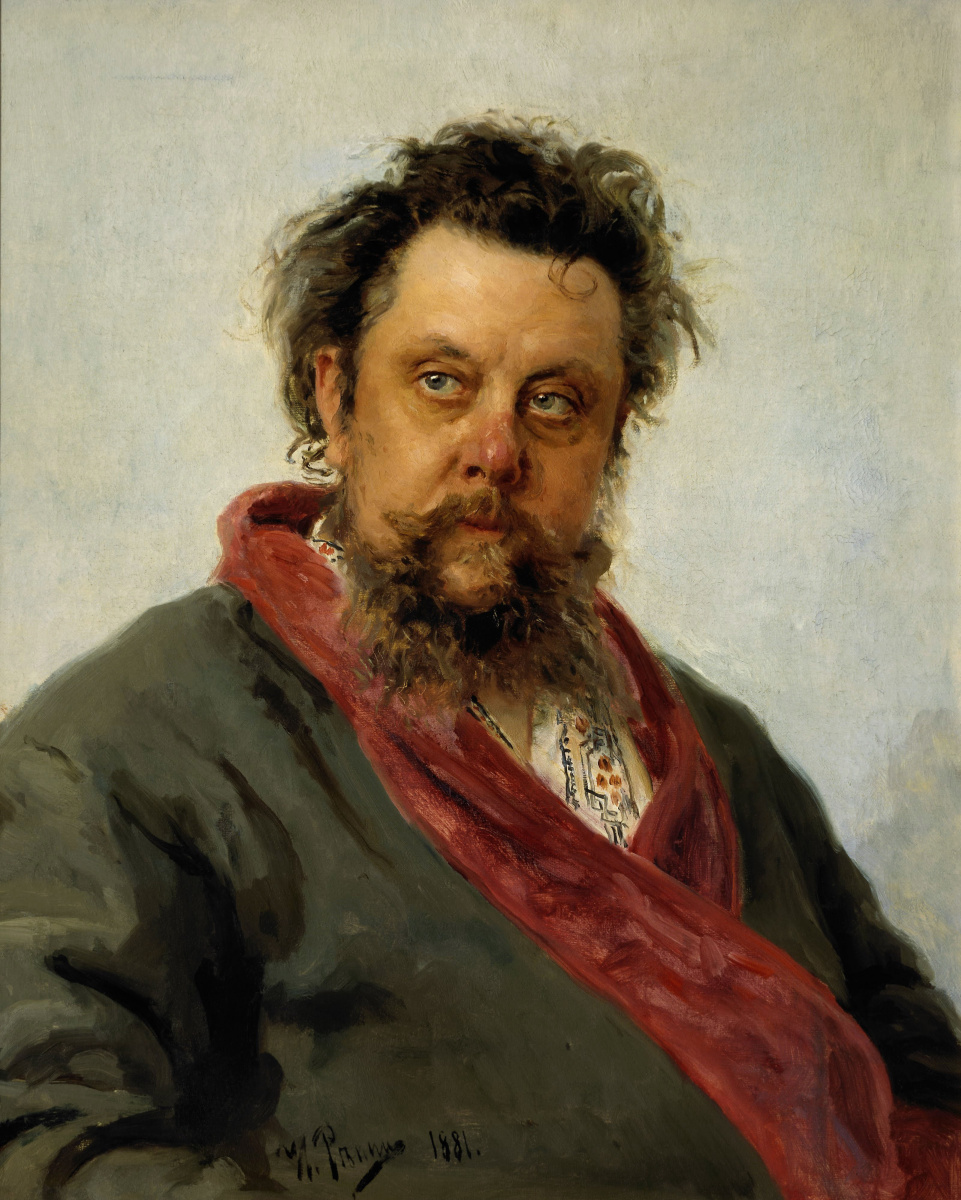
1881 71.8 × 58.5 cm
“Pavel Tretiakov bought a portrait without seeing him, but only after hearing that Repin in the hospital writes a sick Mussorgsky… The special penetration of this portrait is caused by the fact that Mussorgsky could “pose” the least in his state. Not having the opportunity to install Molbert, Repin just copying next to a seriously ill friend and almost “on the knee” wrote Mussorgsky… “-Description of the picture in ARTVH.
- Ivan N. Kramskoy. Portrait of chemist Dmitry Ivanovich Mendeleev. 1878
- Engraving of the field of Suarta from the portrait of Gottfried Knelller. Portrait of Isaac Newton. 1689
Portrait of Ludwig van Beethoven
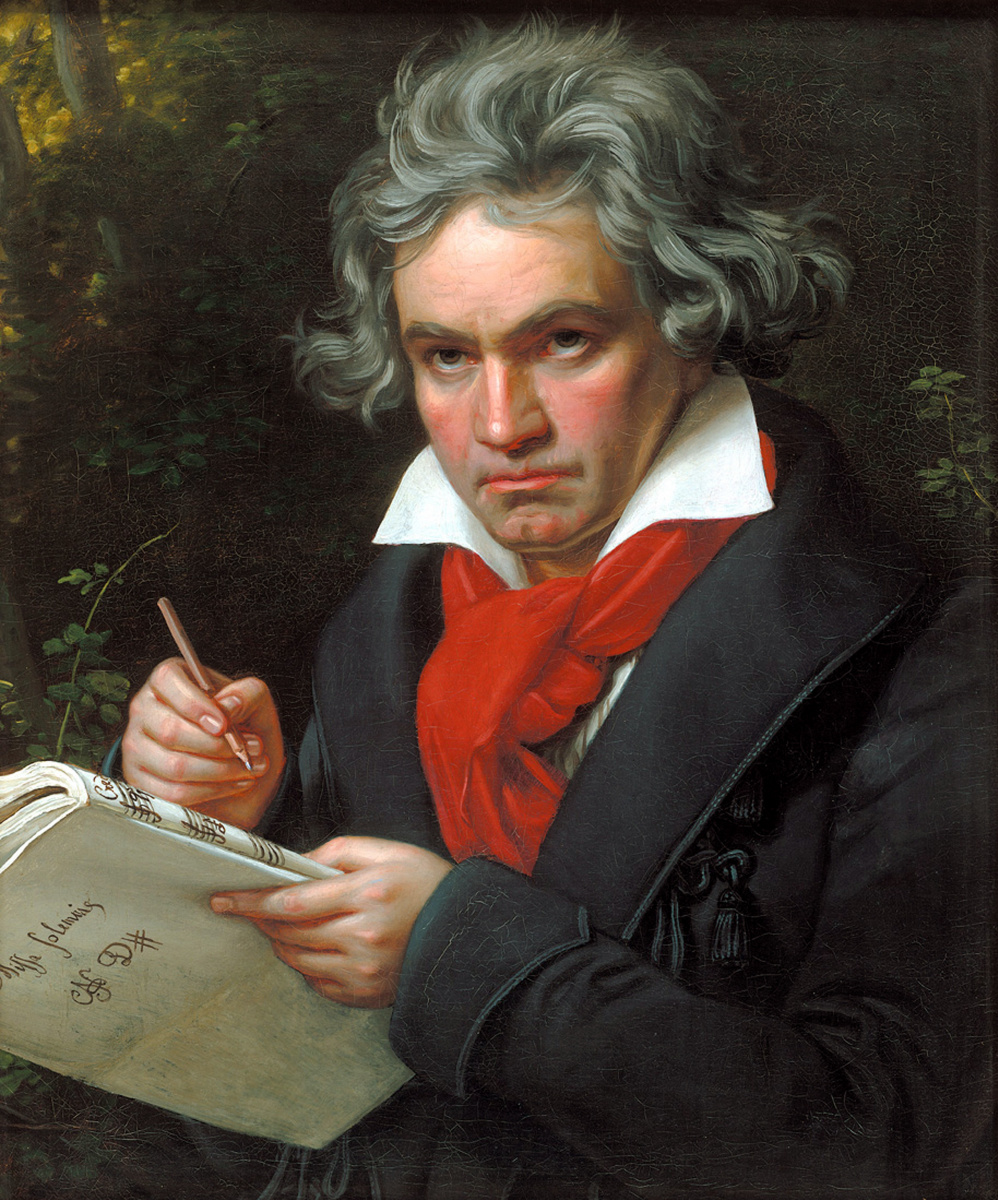
1820, 62 × 50 cm
The richest of all was decorated with the Office of Literature.
From uniform dark backgrounds on schoolboys necessarily looked wings, Pushkin, Gogol, Lermontov, Ostrovsky, Tolstoy and Dostoevsky, to which at times were added feta, Turgenev, Leskova, Chekhov and very occasionally Radiisheva. Karamzin and Derzhadina
. Variety in the serve was not welcomed, the chance to meet Pushkin in the form of careless profile self-portrait from the fields of manuscripts or flying Nabrozsky Nadi Ruseva was negligible-to represent the children the appearance of great writers were to No less great artists.
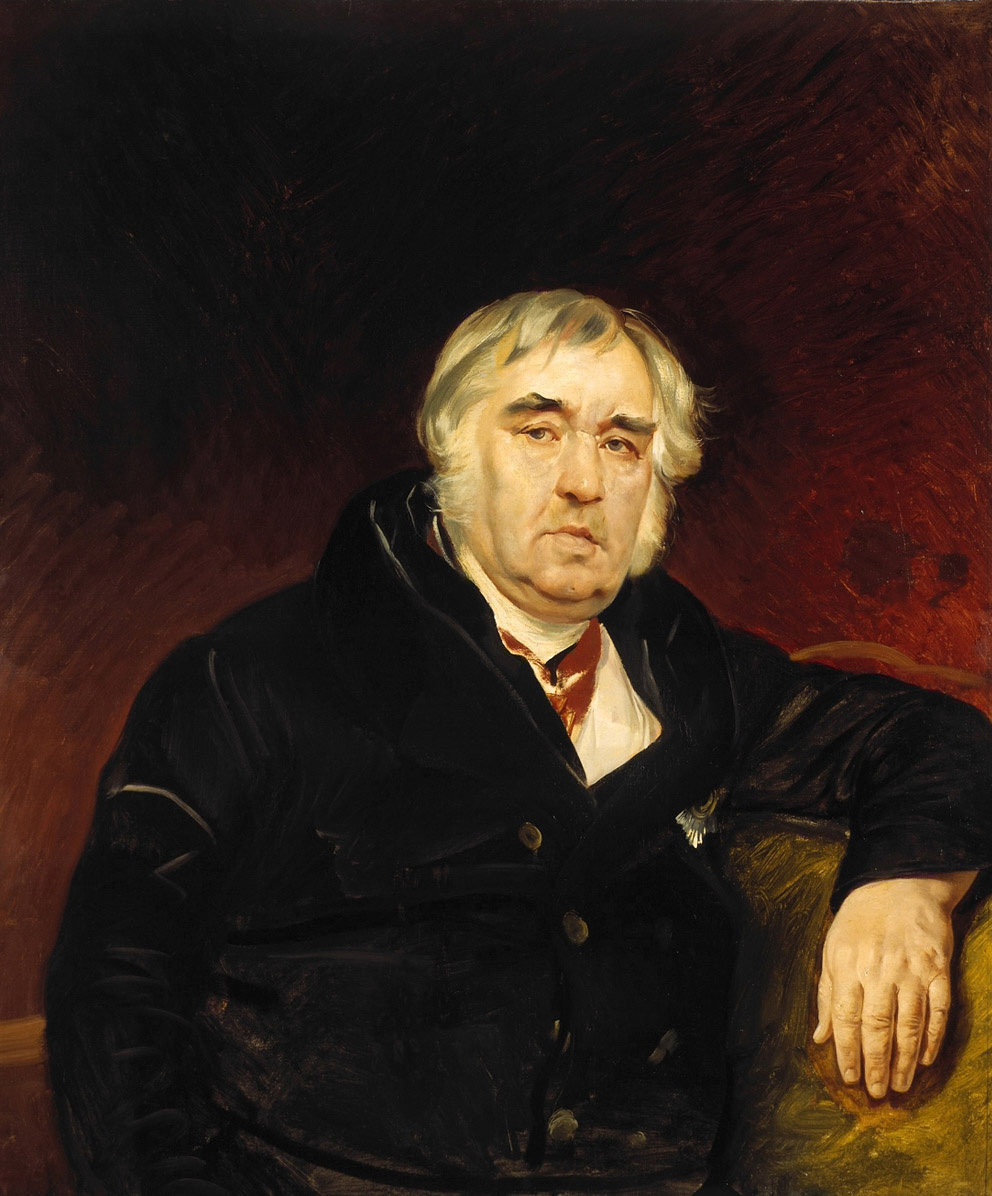
Portrait of the fable writer Ivan Krylova
1839 102.3 × 86.2 cm
The portrait of Krylov was a mandatory part, because his fables occupied a fair piece of the textbook of literature. Ivan Andreevich, an amateur of harsh trujg-ants, for us the great Karl Bryllov has captured. Thanks to his romantic brush, this portrait is a little out of the general series-at the expense of the beloved Bryllov dramatic red background. Spolochi in the background and the game of pinkish-red reflexes inform the fleshy face of Krylov interesting pallor, which was unlikely to be peculiar to this sibarita and gourmet, and the portrait as a whole-a fair pateticity. According to
the memoirs of contemporaries, work on The portrait went hard: “Carl and his teeth spoke to him, and forced the disciples to read aloud,” The fat old man every quarter of an hour with unexpected ease rose from the armchairs and kept saying that it was time for him, that there was no time that it was later that Carl, though great, was just as great Lazy, the portrait still does not finish, tomorrow will forget about him, only tormented by the seat. Carl was angry, grabbed Ivan Andreevich by the shoulders, Silkom pushed back into the armchair and, having broken up, tried to write in one session-another time the old man in the workshop Kalach not lur
e. “The portrait, by the way, is not finished completely: the bottom edge of the picture remained in the stage of The brush of the hand was written after the death of the Basnopissa pupil Bryullov: “There was an unwritten hand, lying on the back of the chair, when Ivan Andreevich stood on his feet with such confidence that it became clear, no longer sit. Carl laughed, “What an impatient man!” and showed a brush on a piece of undyed canvas in the place where the hand should be. The wings, smiling with his eyes, said: “The hand is on your conscience, Carl Pavlovich. I bet I’ll keep you from writing it before I die. “
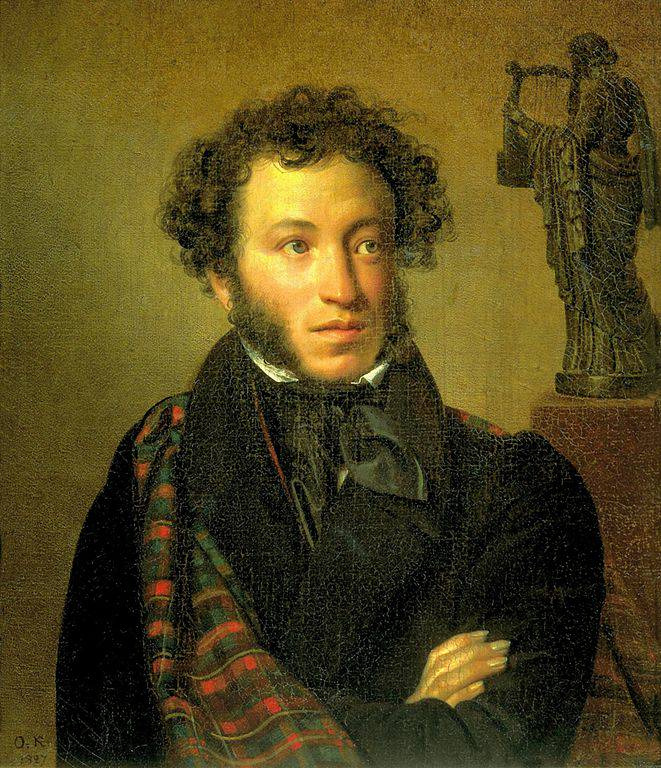
1827, 54 × 63 cm
Next to the wings goes, naturally, “Our all”-Alexander Sergeevich Pushkin in the filing of the Oresta Cyprienskiy. “I see myself as in a mirror, but it is a mirror to me”: a glance past the spectator and up, careless curls, a Scottish plaid over a shoulder, polished long nails on a swarmy hand and a bronze muse with a lira on a tumba behind.
Why was the chosen Pushkin of Cyprus, and not softer, “home” Pushkin Troyina?
He was probably rejected because of his “homework.” Not to the sun of Russian poetry before schoolchildren in the robe to sit, it is enough that they class to the seventh everyone will know that he was a duelist, a bully and a womanant.

Portrait of Alexander Sergeevich Pushkin
1827, 68 × 56 cm
Where Pushkin-there and Lermontov: invariably brush p. E. Zabolotsky, the big-eyed, with thin antennae, in a red leyb-guard Mentik, rasstezbent not on a form that all understood a craving of the young cornet to freedom. Of all the literary portraits, he is the prettiest, so the girls fall in love with him. That in fact Mikhail Yurievich was low-speed, curvilinear, is disproportionately complicated, not so big-eyed (“Eyes small, Kalmyk” © and with disgusting character they will learn (if they want) later. Although to understand this, it is enough to read the “Hero of Our Time”. Why is the portrait of Zabolotsky so charming?
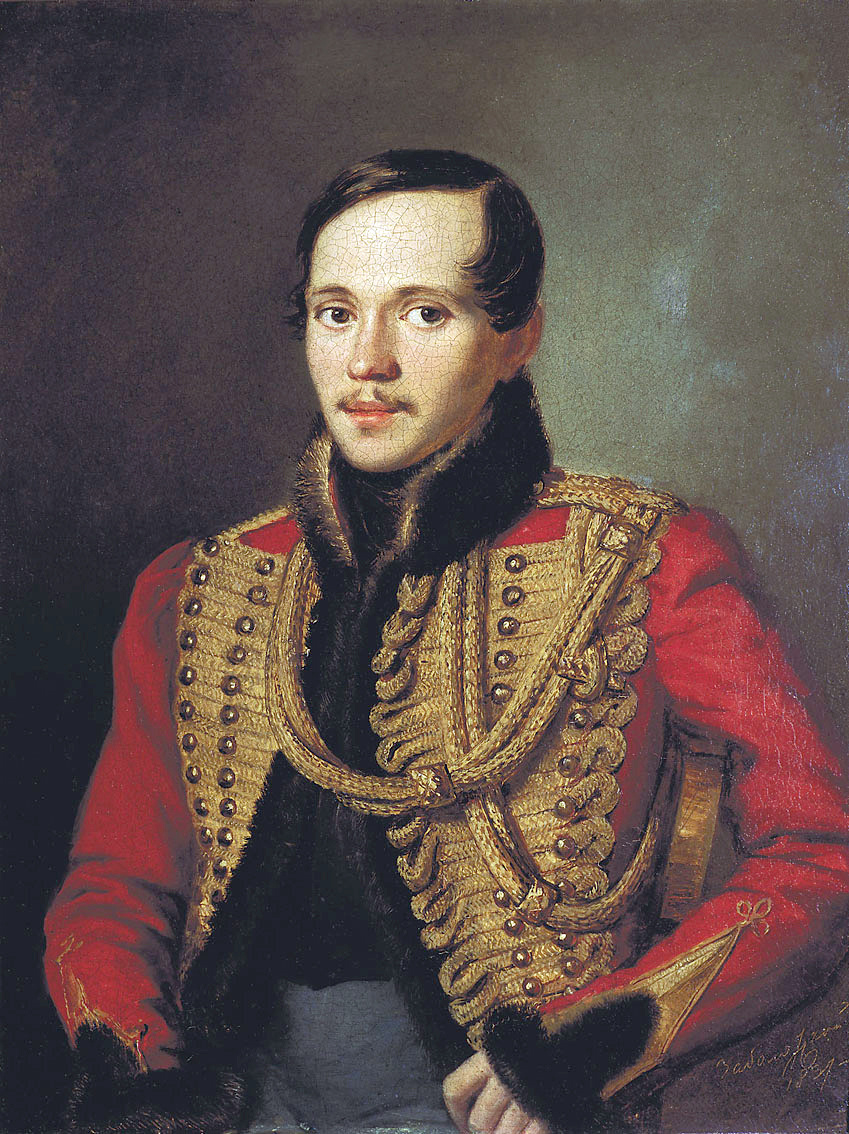
Portrait of the poet Mikhail Lermontov
1837, 28 × 36 cm
Probably because the poet and the artist were friends (Lermontov took from Zabolotsky lessons of painting), and friendship-excellent potion of beauty. However, and without it some portion of flattery in the portrait would be for sure-Russian portrait painting of the beginning of the 19th century technical, academic and fairly complimentary and any artist who has been educated, knows perfectly well that it is necessary to enlarge, reduce, where Align the skin tone and when to add the “shadow of
Deep Thought on the brow.” Next to Lermontov (as an object of love Schoolgirls) was Gogol-long-haired, crafty smiling, similar to Cardinal Richelieu in the domestic “Three Musketeers”, written in the background Sky, not a dusty drapery.
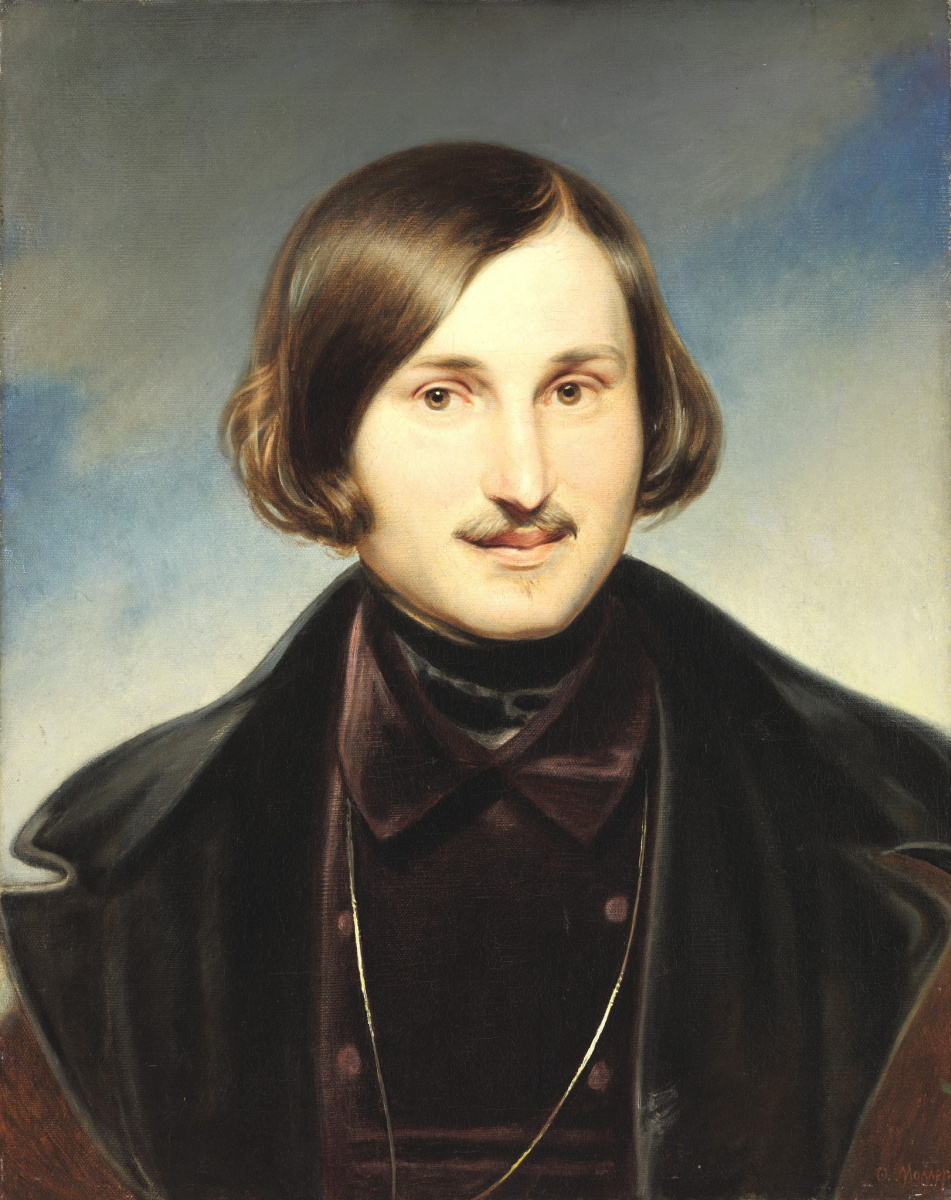
Portrait of the writer Nikolai Vasilyevich Gogol
47 × 59 cm
This portrait-and indeed quite successful-the writer ordered for his mother in Italy, his good acquaintance, who lived there at the time, painter Moller. Nikolai Vasilevich took a serious approach to writing the portrait. “Gogol, apparently, thought then, how to look more beautiful, put on a frock coat, in what he had never seen before, or after, stretched on the vest an incredible bead chain; He sat down, perhaps, to hide from his descendants, as much as possible, his long nose, which, however, was not particularly long… ” In the. Berg.
The writers-realists-Ostrovsky, Tolstoy, Dostoevsky, Turgenev, Leskov, who, in their turn, undertook to perpetuate the realist artists-Perov, Kramskoy, GE, Repin-have come to the romanists... The time of the invited hairstyles, carefully selected costumes and demonstrative goodness has ended, now the naturalness, home outfits and a hint of a heavy blow in the eyes were valued. Or, speaking in words in. In the. Stasov: “The appeal of the Russian artist to the real truth and life, including the portrait, began from the time of the birth in Russian art of the same nationality, truthfulness and originality, which have long existed in the Russian literature.” P
ortrait of playwright A. N. Island brush in. Thursday,. Perova we can observe all of the above at once-the view of the writer Surov and Svetel, Beard demonstratively Nezasan, and a fur-lined home robe looks like a cross between the Hare Tulpchicomo Pushkin Pugacheva and Mantle provincial King Lira.
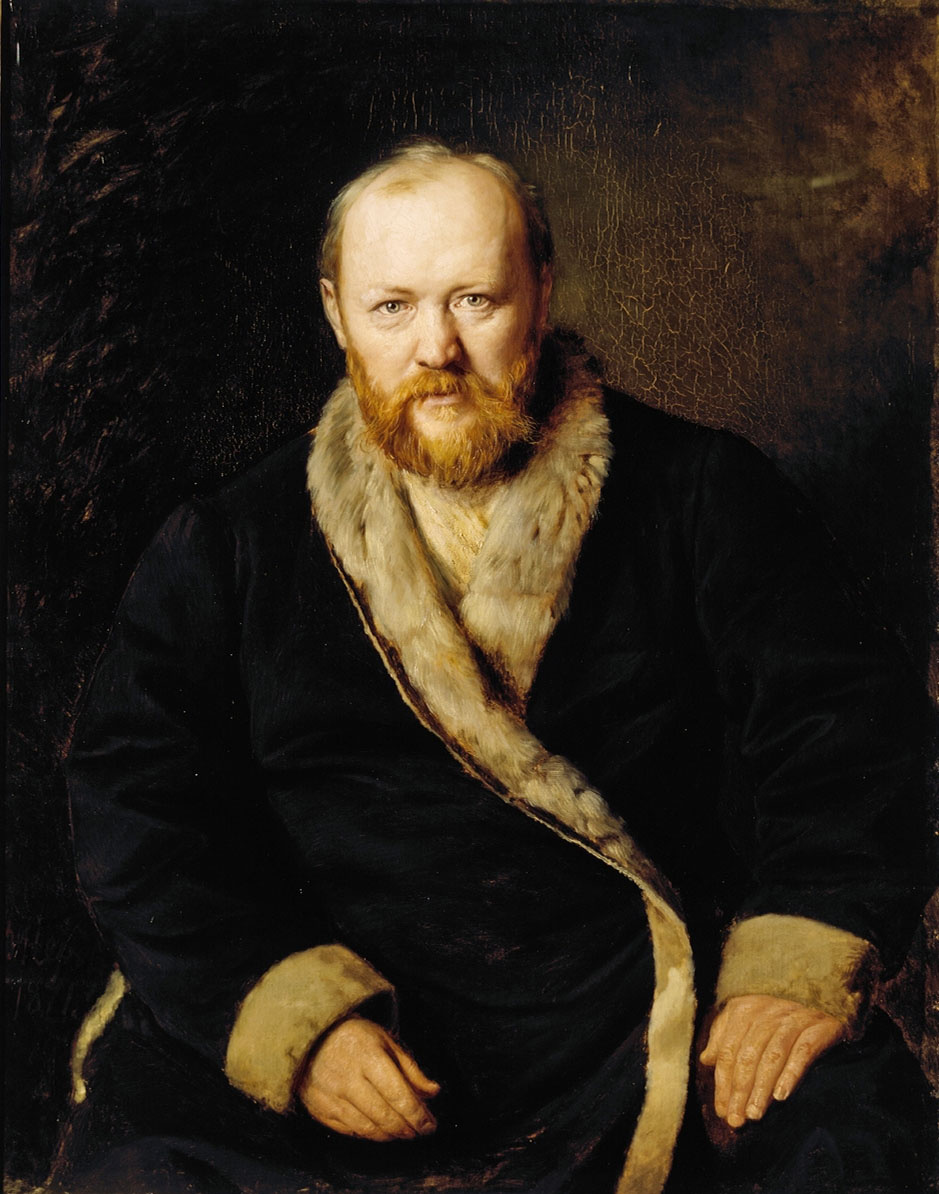
Portrait of playwright A. N. Ostrovsky
1871 103.5 × 80.7 cm
However, next to the Perovsky portrait of Dostoevsky, the portrait of Ostrouski looks quite innocent.
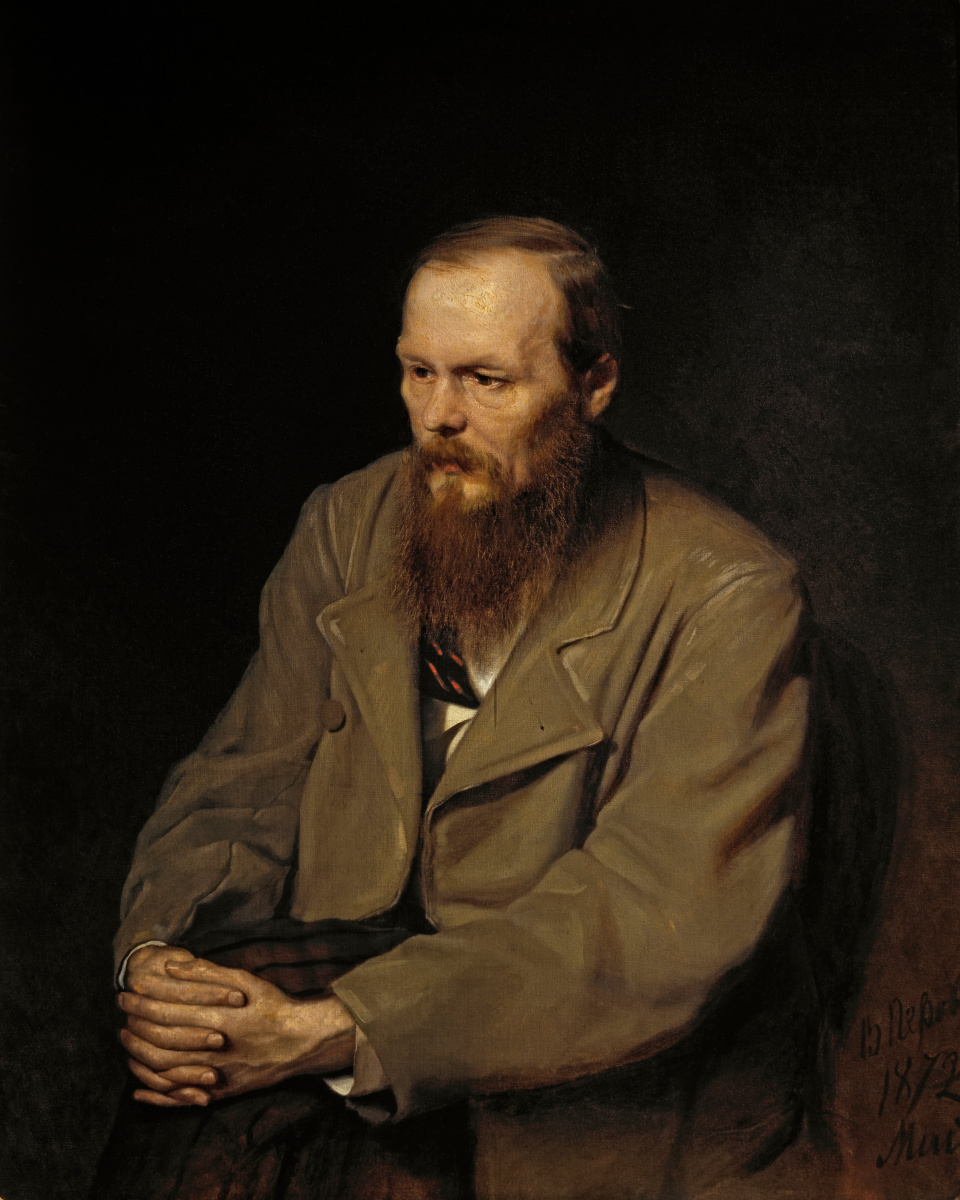
Portrait of the writer Fedor Mikhailovich Dostoevsky
1872, 99 × 80 cm
Fedor Mikhailovich works of Perova scares like a golem: a earthy face with a stopped look, like a clay-blind clothes, with which the body seems to be bent and creepy hands with the fingers coupled to the lock (in sight nine, but constantly it seems that Twice as much).
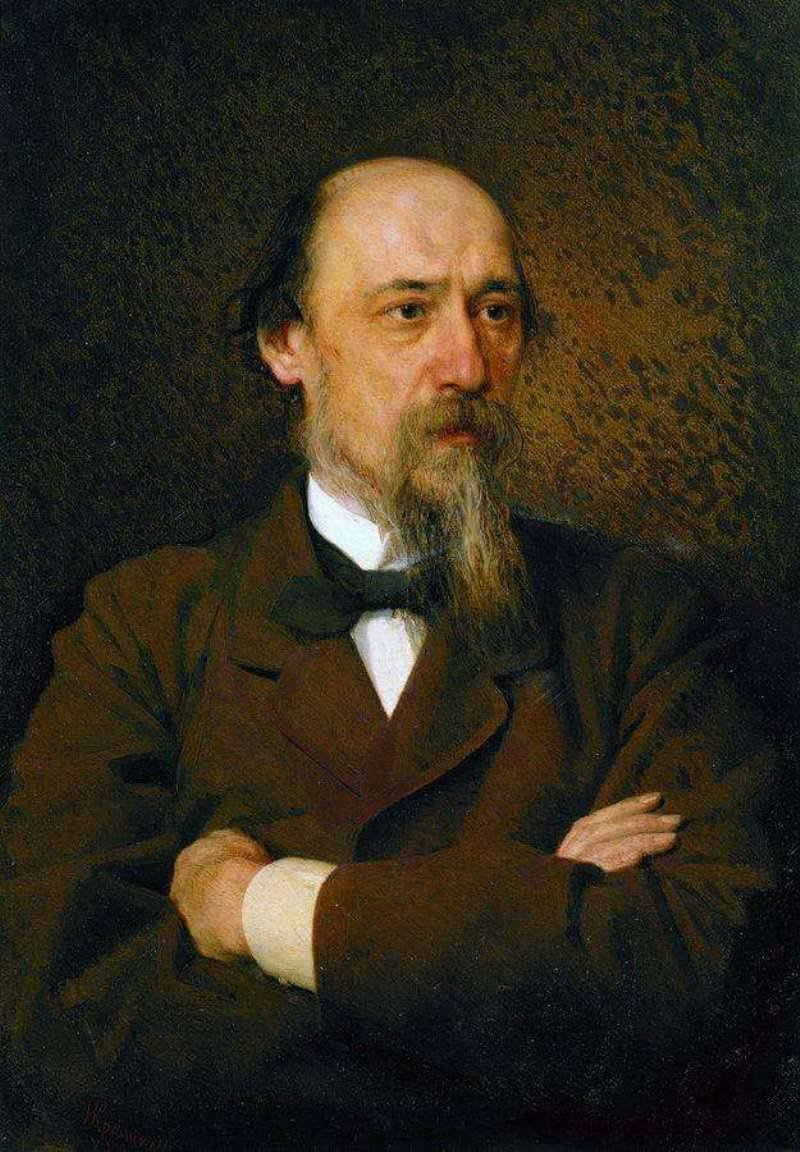
Portrait of the poet Nikolay Alekseevich Nekrasov
Ivan Kramskoy
1877, 75 × 55 cm
Portrait of the writer-satirist Mikhail Yevgrafovich Saltykova-Shchedrin
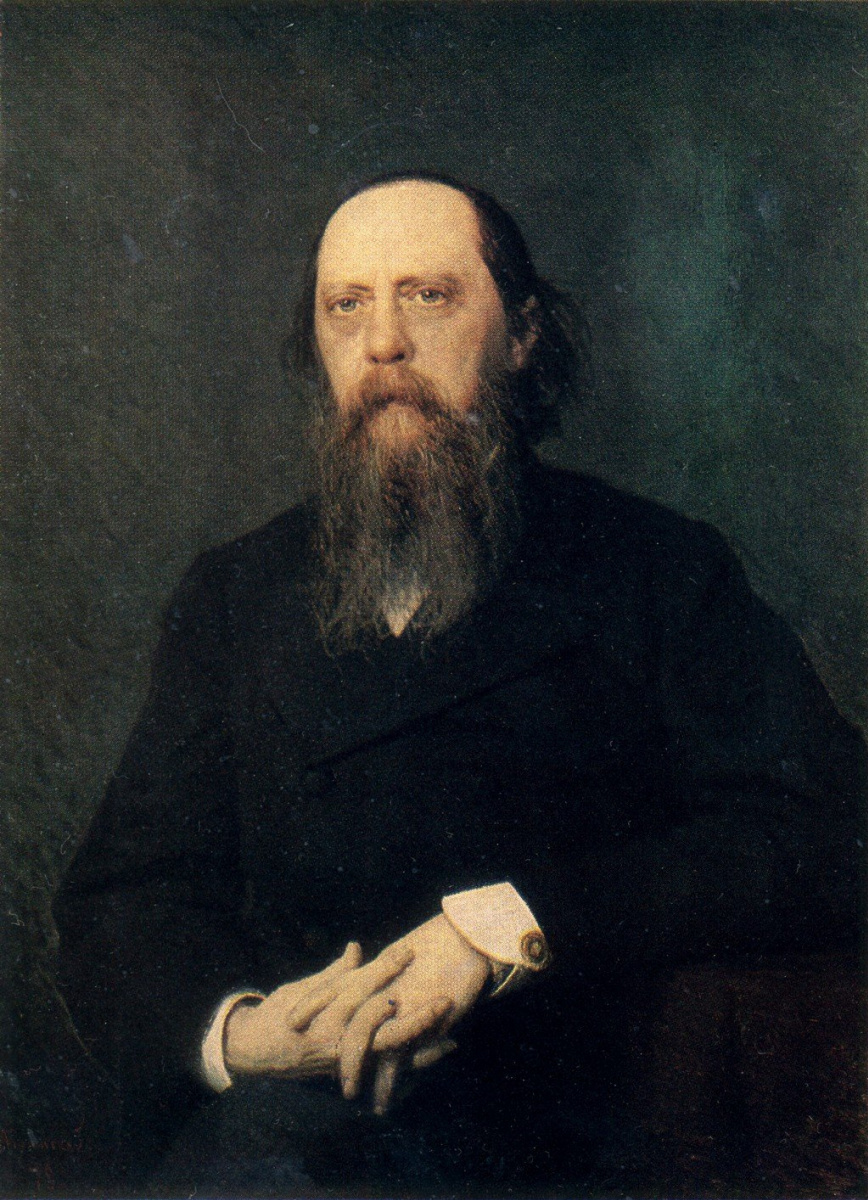
Ivan Kramskoy
1879, 88 × 68 cm
Portrait of the poet Nikolay Alekseevich Nekrasov
Ivan Kramskoy
Great and. N. Kramskoy also gifted school cabinets with several literary portraits, written by the Order of Restless Tretyakov: exhausted by Saltykov-shcheridin with eyes in the red eyelids and already traditionally cloibed beard and hair (once a large The writer and the Vice-Governor of Tver for clapping hair scratching), sad, already terminally ill unkrasovym, bored Griboyedov and gloomy Leo Nikolaevich Tolstoy.
«… Since 1869, Tretyakov began to order portraits of celebrities, taking care not only of the artistic, but also of the historical value of the collection. It required a great deal of delicacy and remarkable organizational abilities. Persuade to pose Tchaikovsky, unable to sit a few minutes in front of the camera lens. Find an artist who quickly and “without torment” will write a portrait of Dostoevsky. To convince modest Goncharov that he is worthy not less than Tolstoy. To persuade Kramskoy to write Turgenev after it was not quite possible to repina himself… It used to be that the Tretyakov was not visiting any artists near the cultural icon of those years. and took the portraitist with the model somewhere in Europe-and in those years there was no mobile communication and social networks. “— the material about Pavel Tretiyakov in ARTVH.
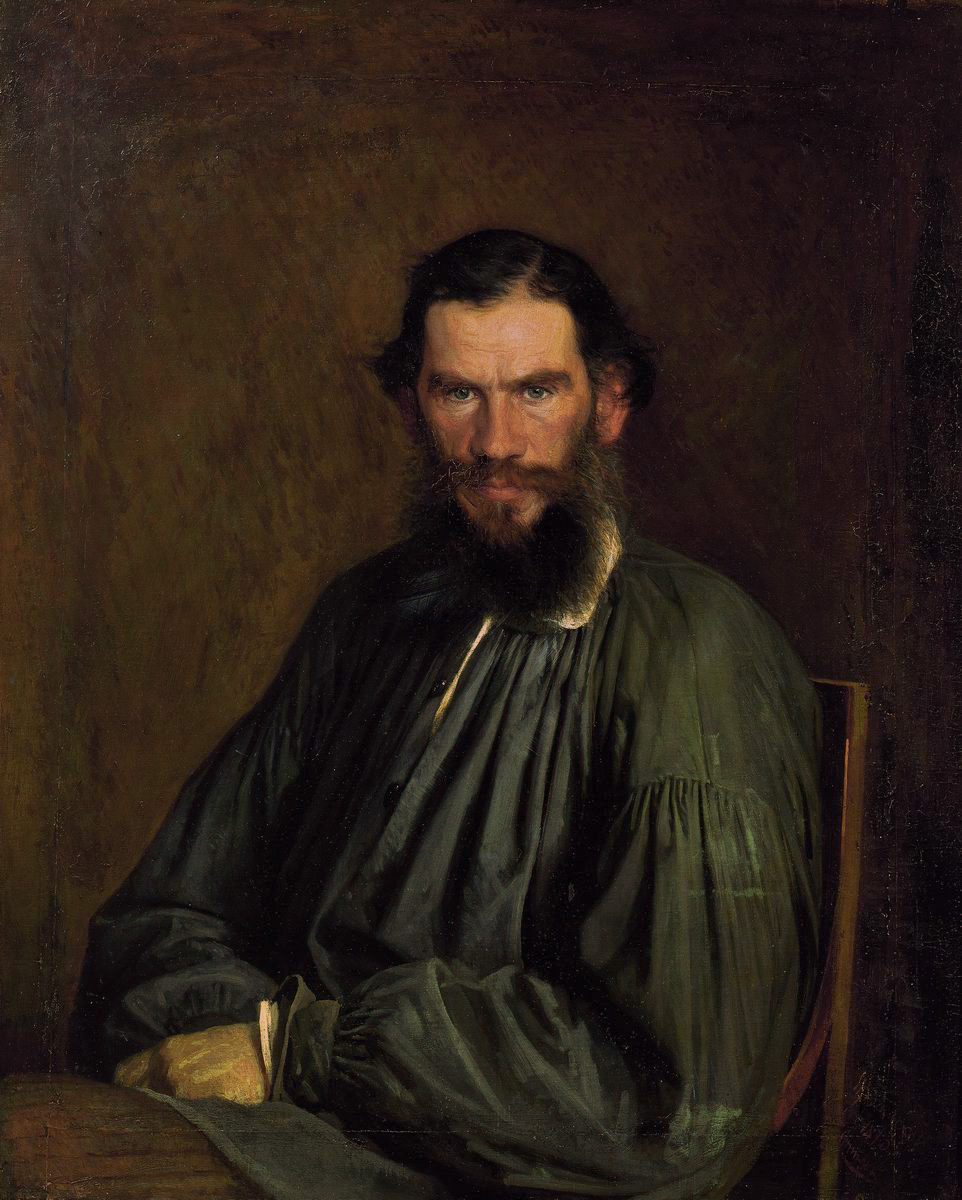
Portrait of the writer Lev Tolstoy
1873, 98 × 79 cm
The Count Tolstoy’s artist had to run-to pose that long refused, but eventually surrendered.
The look of Tolstoy sitting in front of the empty-no books, no manuscripts-a table in the working blouse, Kramskoy was a s
uccess especially. Sofya Andreevna Tolstoy wrote about the work of Kramskoy sister so: “We now have every day an artist painter Kramskoy, and writes two Levachkina Portrait oil paints… It looks great to look even scary “. And in fact
” even scary “-from under the overhanging eyebrows the count broadcasts to the viewer something very unpleasant. For example: “Did you read” War and Peace “? And the second volume? What if I check? “
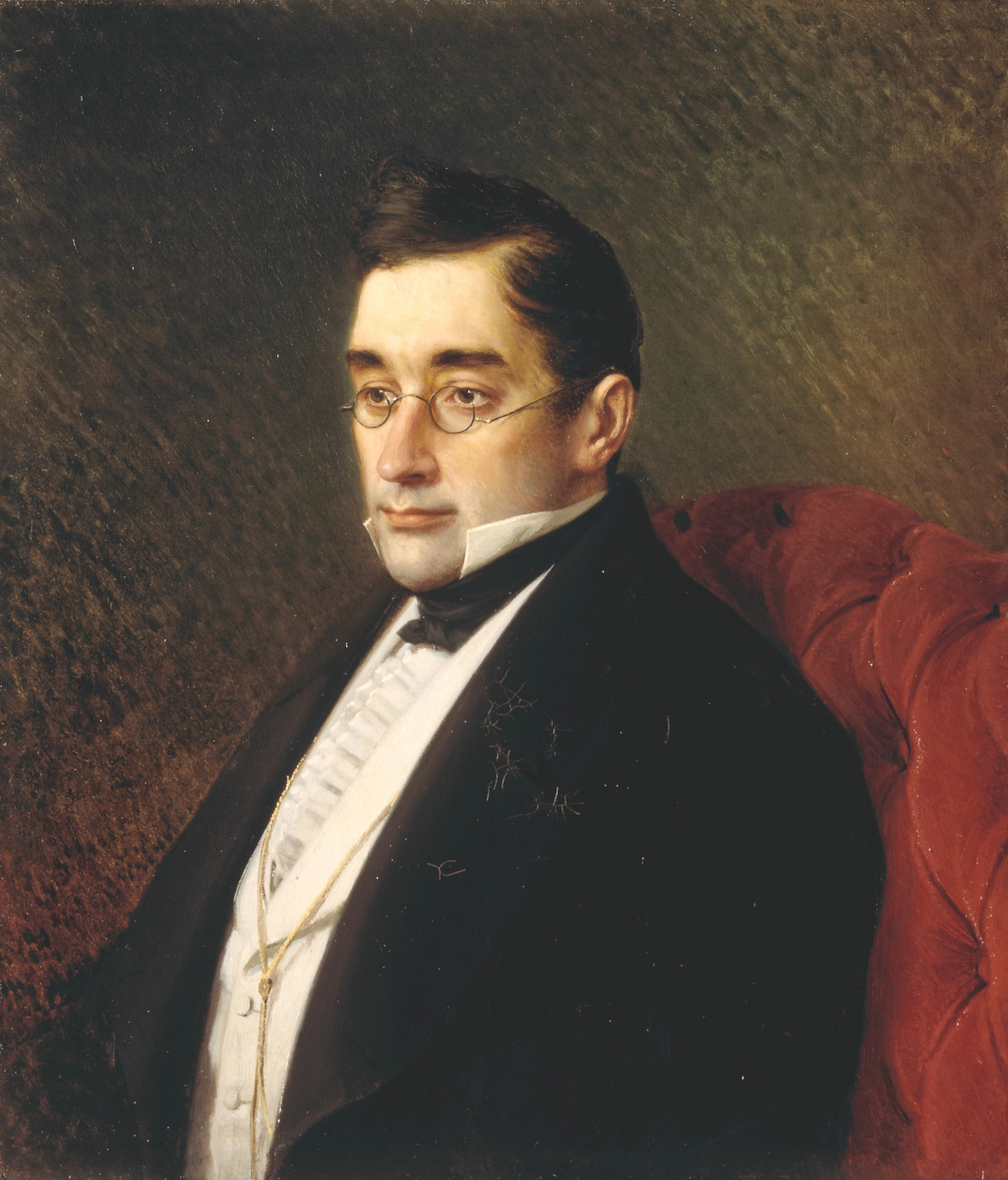
1873, 57 × 66 cm
But Griboyedov Kramskoy to persuade did not have to-refuse posing he could not, because at the time of writing the portrait was, unfortunately, dead. However, Kramskoy came to the case seriously. Not content with the preserved lithographs, found all possible sketches and spoke with the people who remembered the poet, as well as with the artist Kartygiin, who wrote the watercolor portrait of Griboyedov.
Due to the specifics of the order for this portrait Kramskoy had to humble his freestyle brush, so the portrait turned out in a good academic style.
However, in the “enlarged writer’s set” there is another work of Kramskoy, which falls out of the “unceremonial-careless Style”. Sitting in a chair and. A. Pottery is majestic, blissful and pleases the eye with starchy shirt and grey (for a variety of hairstyles) sideburns.
By the way, it is good that Goncharov did not read the letters which Kramskoy in the course of work wrote to Tretyakov: “He sits w[Гончаров]ell and has completely become tame”.
Repin was also noted in the “Literary Project”.
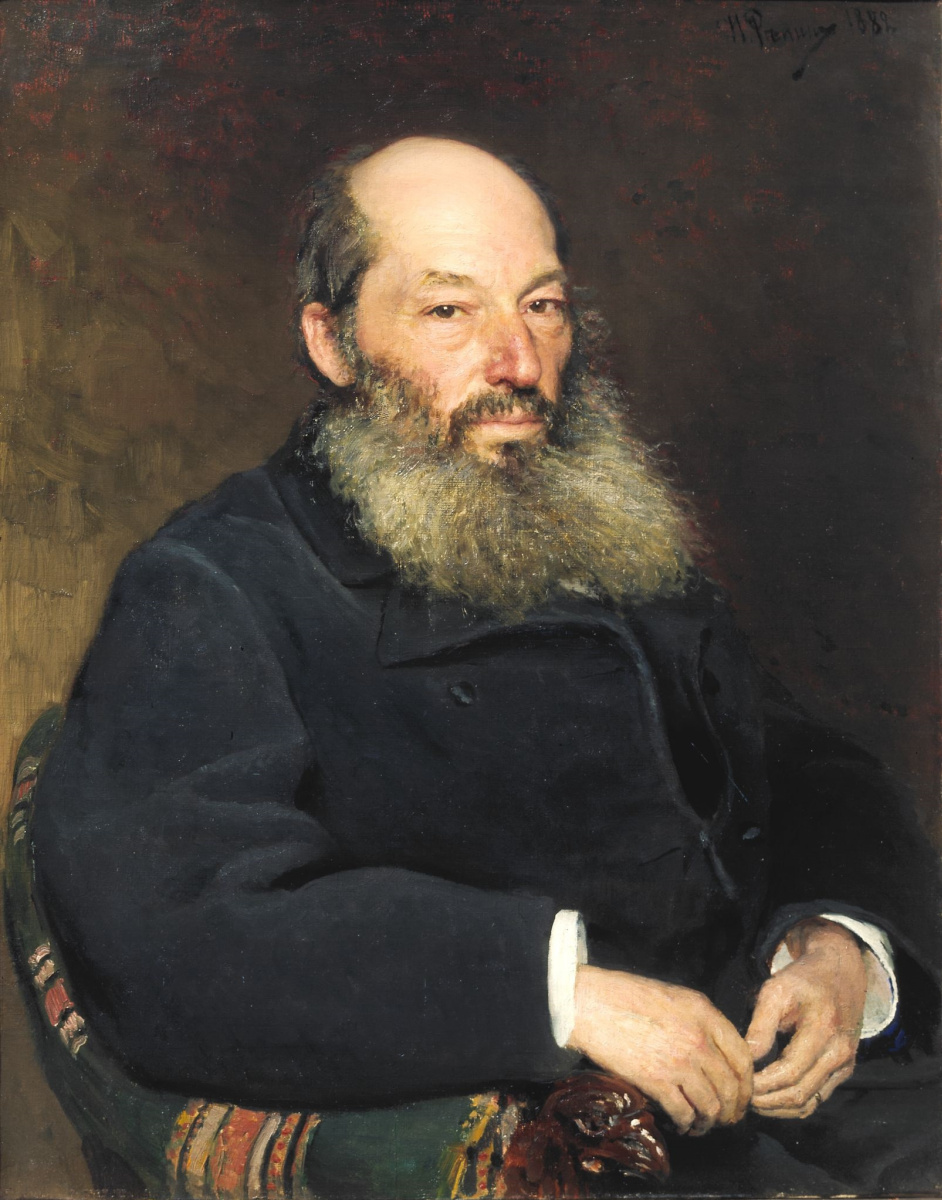
1882, 82 × 64 cm
His portrait of Athanasius Feta, created by order of Tretyakov, once again confirms that the wide, pastoral painting is ruining the bad reproduction. Muffled-peed background strokes, angle design with striped armchair upholstery, large folds of a frock-coat, a whitening thread on the armrest of a chair, pale, feminine-little hands, looking out of free white cuffs-all this on the copy loses Depth and volume. To escape from the flattening manages only a person-a non-beautiful, but undoubtedly memorable: a massive, enlarged bald, forehead, large nose, sad dark eyes of a long cut and a silver beard fan. Biographers of
the artist write that for the portrait of Repin Took off without hunting, because he was sickled by the poet’s “bareness” and arrogance, but Repin himself recalls the fete not without sympathy: “I sat humbly, listened only to feta and looked only at him: he chained me with his unprettness and was irresistibly imposing his Rough simplicity. A basistous sound voice and even a heavy cough were very much going to him. But there was nothing poetic in his words or in his figure. It was the rough prose of the landlord, the landowner, the Deler, the multi-skilled and the very clever. “
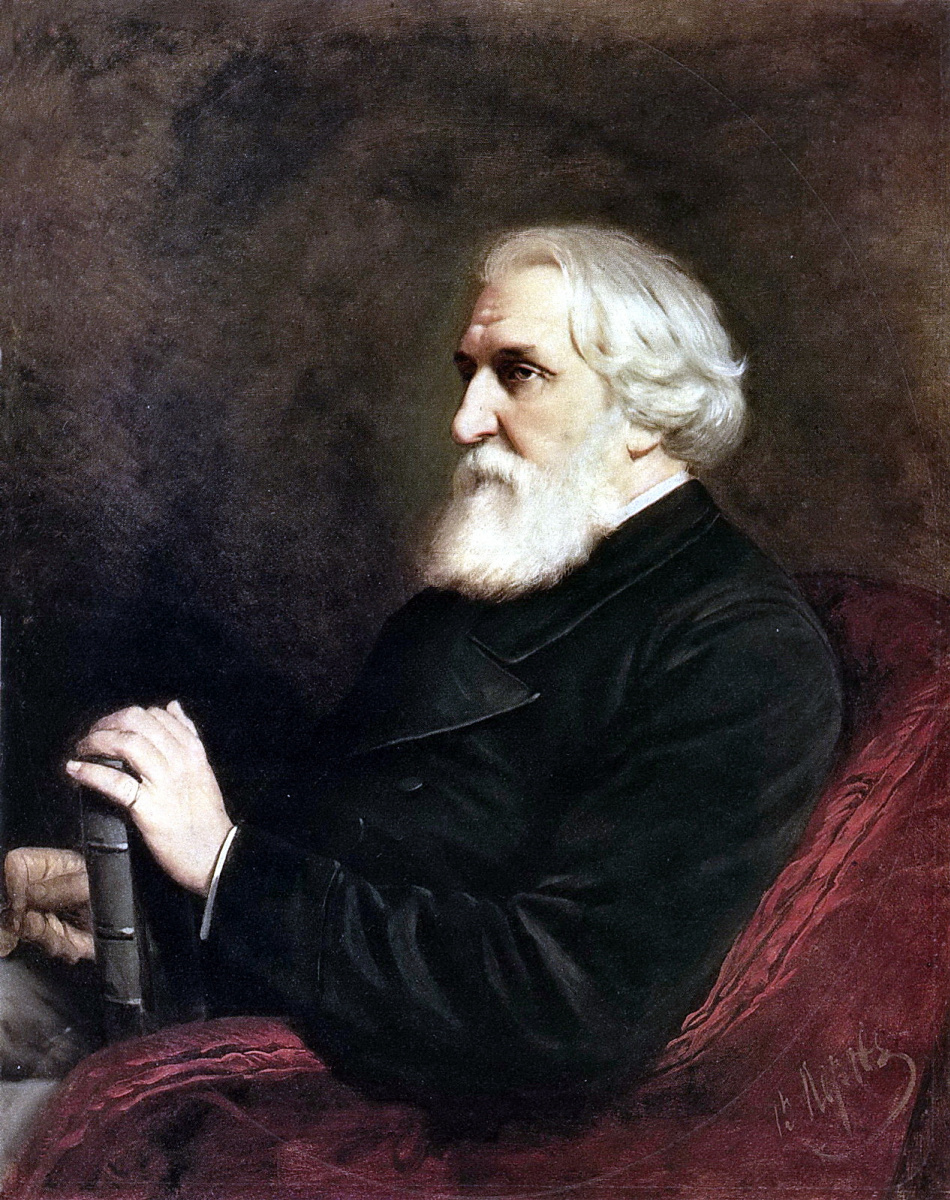
Portrait of writer Ivan Sergeevich Turgenev
1872, 102 × 80 cm
The portrait of Ivan Sergeevich Turgenev was also ordered by Repin Tretyakov, although at that time his collection already had a portrait of Turgenev’s hand. This portrait of Repin wrote in Paris, being under the influence of the old Dutch Masters, so the air in the canvas is not in a Repinski little, and the paint of the face (again, not in a Repinski) monotonous. Tretyako
v found the painting of the face too yellow, and the entire portrait Not considered successful. However, Repin and himself agreed. Repin told about the causes of failure shortly before his death. “The first session was so fortunate that I. With. Triumph of my success. ” But before the second session Repin received a “Long” and “restless” note by Turgenev, in which he called the Podmalyvok “very unfortunate start” and asked the artist to start the portrait anew. This change of opinion is explained, as Repin claimed, by the fact that Turgenev’s friend Pauline Viardo rejected the portrait. “And, O my stupidity, I was very hot to turn my well-captured bright underpainting (which I did not have to touch) head down and started with another turning… Alas, the portrait came out dry and dull. “
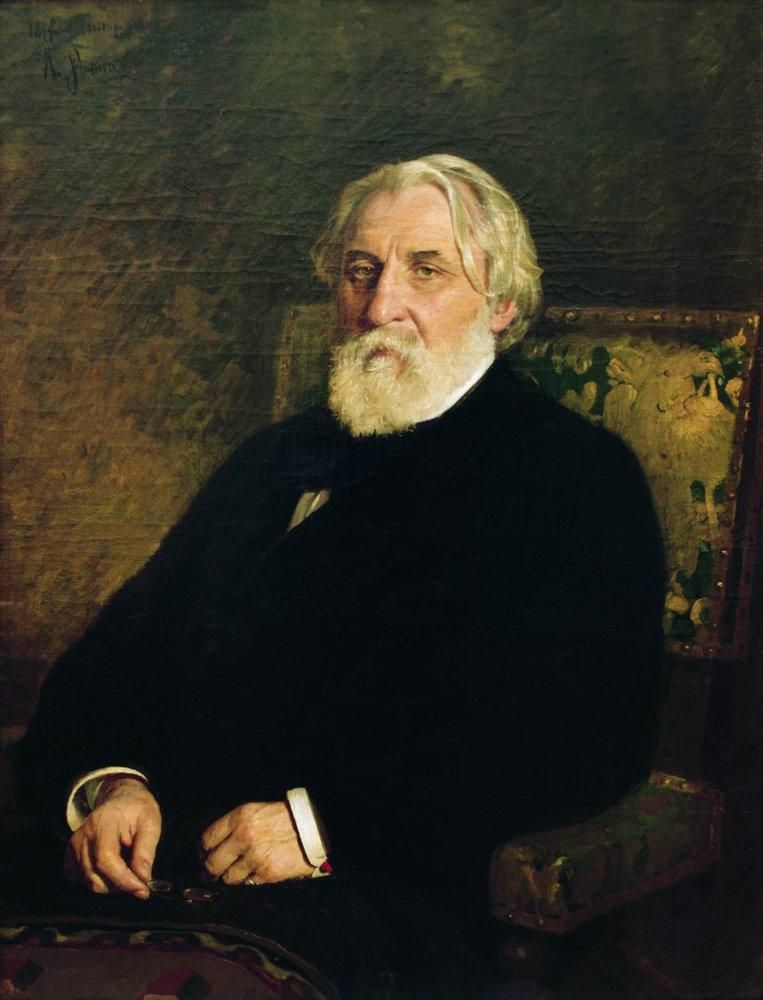
Portrait of the writer Turgenev
1874, 116.5 × 89 cm
A few years later, during the visit of Turgenev to Russia, Tretiakov ordered Repin Another portrait of the writer (and that turned out even worse). Probably, the mutual dislike of the artist and the writer was said: Turgenev called Repin “semi-talentic”, and for Repin Turgenev was “irritated, scrupulous barin, wishing to express contempt and constantly trumpying for his own dignity; He is afraid to bow, afraid and not to like rude arrogance. “
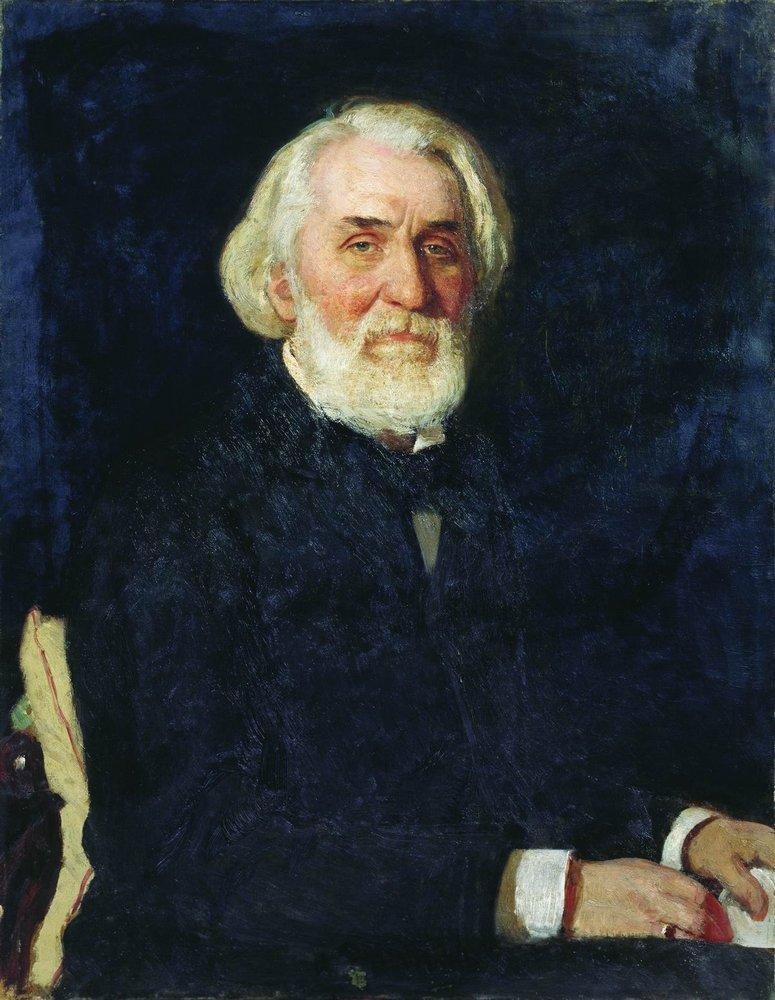
1879, 89 × 68 cm